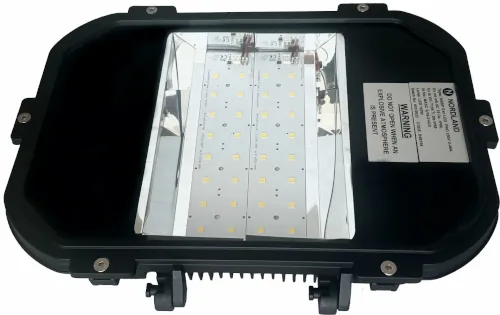
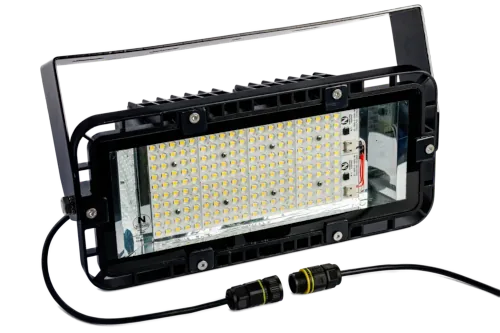
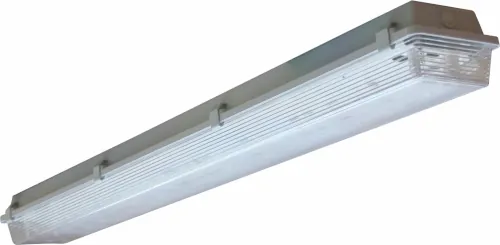
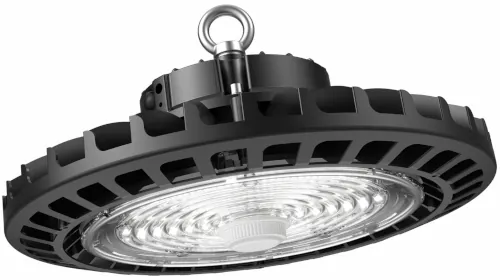
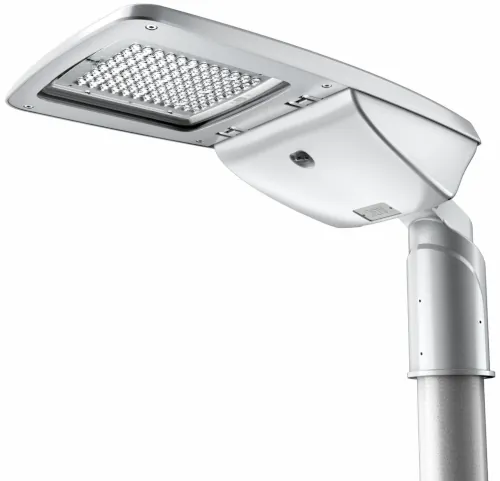
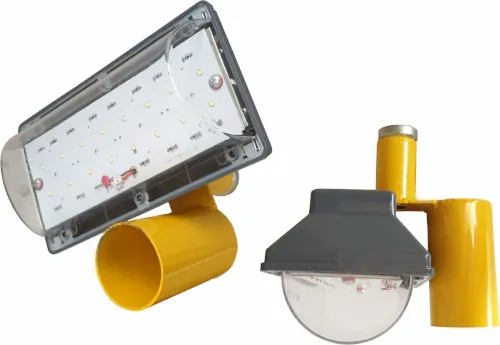
Industrial LED luminaires frequently use substantial aluminium housings because the housing often performs several functions simultaneously.
In many industrial luminaires, the aluminium housing is also the primary heat sink, transferring heat from the LED module and sometimes the driver into the surrounding environment.
A large housing is therefore not necessarily decorative or excessive; it can be a functional part of the thermal and mechanical engineering of the product.
Technical Discussion
Why is aluminium particularly suitable?
Aluminium combines several useful engineering properties:
- Good thermal conductivity.
- Relatively low density.
- Good corrosion resistance under many conditions.
- Ability to be cast or extruded into complex shapes.
- Good structural properties for its weight.
This makes it particularly suitable where one component needs to serve as both:
mechanical enclosure + thermal-management structure.
Why do industrial luminaires need more substantial housings?
Industrial environments can impose demanding conditions such as:
- High ambient temperatures.
- Dust.
- Moisture.
- Vibration.
- Corrosion.
- Mechanical impact.
- Long operating hours.
The housing therefore needs to protect the internal components while also allowing thermal energy to escape.
Does more aluminium automatically mean better cooling?
No.
The source FAQ correctly rejects this assumption.
Thermal effectiveness also depends on:
- Surface area.
- Geometry.
- Fin design.
- Airflow.
- Thermal interfaces.
- Material distribution.
- Component positioning.
Adding aluminium in the wrong place may add weight and cost without materially improving cooling.
Can reducing housing mass be beneficial?
Yes, provided the reduction results from sound engineering.
Using less material can reduce:
- Embodied material.
- Manufacturing impacts.
- Shipping mass.
- Cost.
But the source FAQ correctly cautions that removing excessive material without thermal analysis can compromise performance and service life.
The engineering objective is therefore optimisation, not simply minimum mass.
Why can a heavier luminaire sometimes have a lifecycle advantage?
A more substantial housing may provide:
- Better thermal performance.
- Greater mechanical durability.
- Longer service life.
- Better repairability.
- Greater capacity for future component upgrades.
If the housing remains in service through multiple generations of:
- LED modules.
- Drivers.
- Controls.
its environmental and economic value may extend well beyond the first generation of electronics.
Is a lightweight luminaire therefore inferior?
Not necessarily.
Modern thermal modelling, improved materials and efficient LEDs can allow manufacturers to reduce housing mass while maintaining excellent thermal performance.
What matters is measured and demonstrated performance, not weight alone.
What are the sustainability implications?
This is particularly important.
The source FAQ correctly notes that sustainability cannot be assessed purely from the amount of aluminium used.
A simplified comparison illustrates the issue:
Lightweight disposable luminaire
Less initial material, but complete replacement after component failure.
versus
Durable modular luminaire
More initial aluminium, but housing retained while shorter-life components are replaced.
The second product may create less material waste over a long evaluation period despite using more aluminium initially.
A meaningful assessment therefore needs a lifecycle perspective rather than simply kilograms of material at manufacture.
Important Notes
Safety
The housing forms part of the mechanical and environmental protection system.
Reducing material or altering housing geometry must not compromise:
- Structural strength.
- IP protection.
- Impact resistance.
- Electrical safety.
- Hazardous-area certification where applicable.
Lifecycle Cost Impact
A durable aluminium housing can represent long-life infrastructure.
If the housing remains serviceable while:
- Drivers.
- LED modules.
- Surge components.
are replaced or upgraded, the owner may avoid repeatedly paying for:
- Complete luminaires.
- Installation labour.
- Access equipment.
- Disposal.
- Replacement infrastructure.
The optimum housing should therefore be assessed according to Total Cost of Ownership and service life, not merely purchase price or weight.
Sources and References
- ANSI/IES LP-4-20(R2026) — Lighting Practice: Electric Light Sources – Properties, Selection, and Specification. Covers LED thermal characteristics, thermal management, heat sinks and operating-environment effects. (IES Webstore)
- CIE S 025/E:2015 — Test Method for LED Lamps, LED Luminaires and LED Modules. Provides standardised measurement of complete LED-luminaire performance under defined conditions. (CIE)
- CIE TC 2-91 — Optical Measurement Methods of LED Packages and LED Arrays. Recognises thermal operating conditions as an important part of LED performance characterisation. (CIE)
Related Articles and FAQs
Related Articles
- Thermal Management in LED Luminaires
- Lifecycle Engineering of Aluminium Luminaire Housings
- Future-Proofing Industrial LED Lighting
FAQs
- What Is a Heat Sink and What Does It Do in an LED Luminaire?
- Why Is Thermal Management So Important in LED Lighting?
- What Is LED Junction Temperature and Why Is It Important?
- Can Removing Aluminium from a Luminaire Reduce Its Service Life?
Nordland Perspective
At Nordland, we regard the aluminium housing as long-life luminaire infrastructure rather than merely packaging around the electronics.
The correct objective is not to maximise aluminium content, nor to minimise it at all costs. It is to use sufficient material, in the correct geometry, to provide the required thermal performance, mechanical durability, environmental protection, repairability and long-term lifecycle value.